Amateurs & Clubs
Beyond the Quest for ELO: A Tailored Pedagogical Offer
With long-standing experience in chess instruction, I have found that effective training relies on a deep understanding of a player's core motivations. I have identified three distinct player profiles, allowing me to tailor Chess-Azimut courses, workshops, and training sessions precisely to your true objectives:
- The Competitor: Win games and climb the official Elo rankings.
- The Artist: Create beautiful games, playing brilliant and expressive moves.
- The Strategist: Understand the deep logic, underlying mechanisms, and core strategic principles of the game.
Our Pedagogical Approach
‣ Structured Training
Goal-oriented programs focused on official Elo performance.
‣ Thematic Workshops
Lessons illustrated by historical masterpieces to develop your aesthetic appreciation of the game.
‣ Foundational Modules
Master the core conceptual pillars of chess strategy.
- Objectives
- WIN GAMES AND IMPROVE YOUR RATING.
- CREATE BEAUTIFUL GAMES, PLAY BRILLIANT AND EXPRESSIVE MOVES.
- UNDERSTAND THE DEEP LOGIC, MECHANISMS, AND STRATEGIC PRINCIPLES.
Dedicated Workshops
- Culture & Connoisseurship: Spectacular games and brilliant combinations.
- Journey Among Champions: A curated presentation of the history's most famous masterpieces.
- Holistic Strategy: Exploring chess in all its analytical dimensions.
- History & Concepts: Legendary victories and structural breakthroughs.
- Tournament Tactics: Theoretical insights built for active competition.
- Embracing Adversity: Transforming in-game difficulties into accelerators for growth.
- Practical Scenarios: Real-time, sports-driven decision making.
“Through engaging, game-based teaching, the chess coach develops the essential cognitive assets needed for any amateur’s success.”
Curriculum & Core Teachings
- Opening setup and structural development.
- Middlegame planning and preparation.
- Tactical execution and endgame fundamentals.
- Identifying critical turning points on the board.
- Differentiating between technical, strategic, and competitive decisions.
- Specialized pins targeting the enemy King and general tactical pins.
- Half-pins, counter-pins, and cross-pins.
- Positional quality sacrifices.
- Tactical and intuitive sacrifices in defensive or endgame scenarios.
- The double exchange sacrifice.
- Maneuvering within locked pawn structures.
- Engineered pawn breaks.
- Endgame maneuvering: transitioning seamlessly from slow prophylaxis to explosive, dynamic play.
- How to efficiently convert winning or highly superior positions.
- Defensive resilience: playing better in inferior or lost positions.
- Theoretical endgames vs. practical endgames.
“Strategy & Leadership: Chess as a winning model”
Programs for Children
- Hour 1: Engaging, game-based learning of core rules.
- Hour 2: The Art of Checkmate (visual references and basic patterns).
- Hour 3: Playing my very first real game.
- Format: Small groups of 4 to 8 children.
- Includes a 1.5-hour team puzzle competition: The KI.KO Checkmate Challenge.
- Format: Small groups of 4 to 8 children.
A bespoke pedagogy tailored to the family’s schedule and academic curriculum.
Quiz
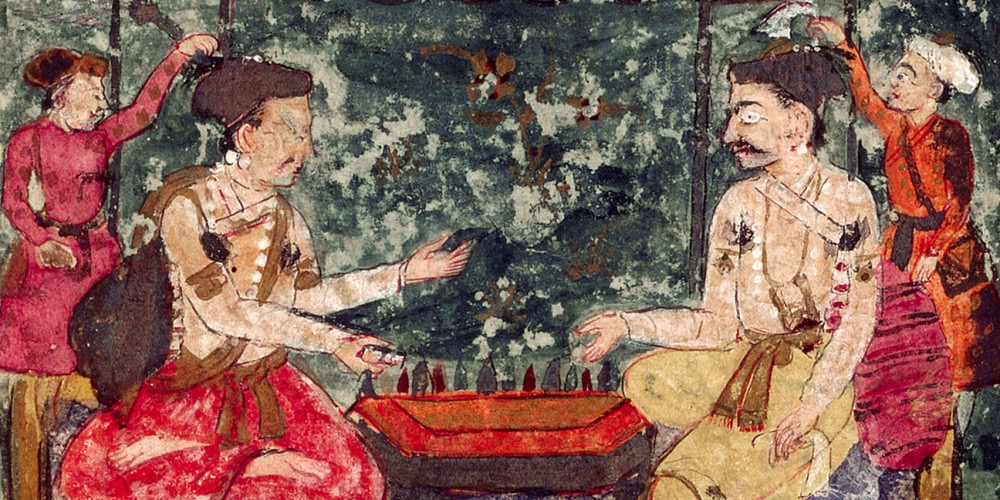
Answer: It appeared in India in the 6th century AD, under the name Chaturanga.
Answer: Wilhelm Steinitz, who held the title from 1886 to 1894.
Answer: The match between the American Bobby Fischer and the Russian (and Soviet) Boris Spassky in 1972, in Reykjavik.
Answer: The Frenchman François-André Danican Philidor (1726–1795).
Answer: Caïssa.
Answer: Yes, there are different possible routes (what is called a “knight’s tour”).
Answer: There are several solutions; one of them is to place the queens on the following squares: a8 - b2 - c4 - d1 - e7 - f5 - g3 - h6.
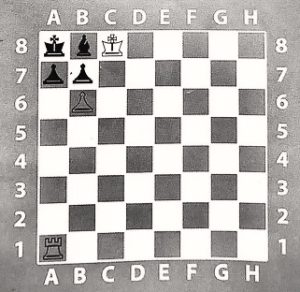
Answer: The first move is 1. Ra6!
If Black plays 1... b7xRa6 then 2. b7# (checkmate).
Or if Black plays any other bishop move, then 2. Ra1xa7# (checkmate).
"There are more adventures on a chessboard than on all the seven seas of the world."
"He who takes risks may lose, but he who takes no risks always loses."
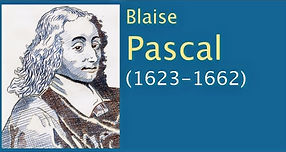
"Chess is the gymnasium of the mind."
Reference sites